Your Clock Is Costing You Money: How to Find Your Peak Play Window
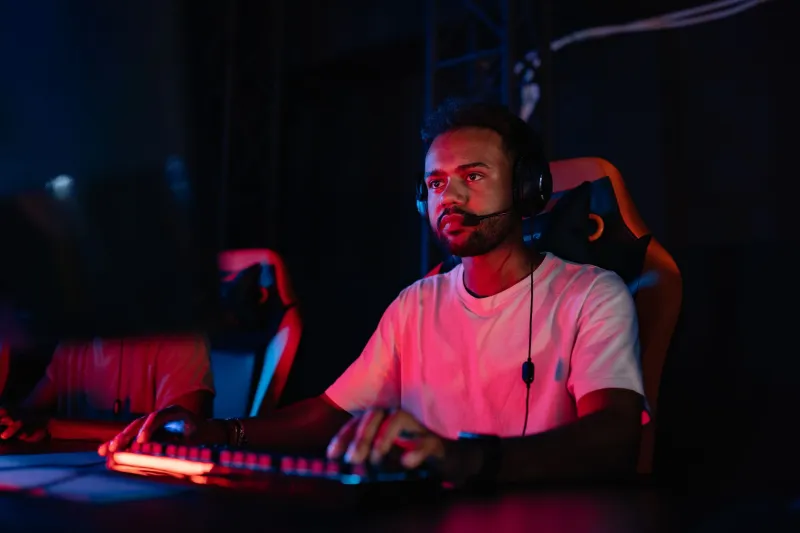
The Schedule Nobody Handed You
If you asked most US players when they do their best live gaming, a lot of them would say something like "whenever I have time" or "usually at night after work." And that's exactly the problem. Because the time you have available and the time your brain is actually operating at peak capacity are often two completely different windows — and playing in the wrong one is a quiet, consistent drain on your results.
This isn't about discipline or strategy in the conventional sense. It's about biology. Specifically, it's about chronotypes — your body's natural preference for when it wants to be awake, alert, and cognitively sharp. And in live gaming, where split-second reads and fast decision-making determine outcomes, chronotype alignment might be one of the most underrated performance variables out there.
What a Chronotype Actually Is
You've heard of night owls and morning people. That's the casual version of what researchers call chronotypes — genetically influenced preferences for when your circadian rhythm peaks and troughs throughout the day. It's not just about when you feel sleepy. It affects your reaction time, working memory, risk assessment, and emotional regulation — all the things that matter when you're in the middle of a live session.
Most people fall somewhere along a spectrum between early chronotypes (natural early risers who peak in the morning) and late chronotypes (night owls who don't hit their stride until mid-afternoon or evening). There's a large middle group too, but even within the middle, there are meaningful differences in when cognitive performance is at its sharpest.
Here's the kicker: research consistently shows that when people are forced to perform complex tasks outside their chronotype window, their accuracy drops, their risk calibration gets skewed, and their decision fatigue sets in faster. Sound familiar?
The 3 AM Player vs. the 3 PM Player
Let's be direct about something. A lot of live gaming in the US happens late at night. Partly because of time zones — plenty of live action originates from Southeast Asian markets, which means certain games and events run during US overnight hours. Partly because that's just when people have time after work, family, and everything else life demands.
For a true night owl — someone whose natural cognitive peak lands between 10 PM and 2 AM — playing at 3 AM might actually be close to optimal. Their alertness is high, their pattern recognition is sharp, and their emotional regulation is solid. They're in the zone.
For an early chronotype sitting at the same table at 3 AM? They're running on fumes. Their prefrontal cortex — the part of the brain responsible for impulse control and risk assessment — is operating at a significant deficit. They might feel like they're playing well because fatigue can produce a kind of false confidence. But their actual decision quality is measurably worse than it would be at 9 AM.
The same logic applies in reverse. If you're a natural night owl forcing yourself to play at 7 AM because that's when a particular market opens, you're fighting your own biology. Your brain hasn't fully come online yet. You're not playing your A-game — you're playing your C-game and hoping the cards cover the gap.
How to Figure Out Your Actual Peak Window
You don't need a sleep lab to get a working read on your chronotype. Start by asking yourself a few honest questions:
- Without an alarm, what time do you naturally wake up when you have no obligations?
- When during the day do you feel most mentally clear — not just awake, but sharp and focused?
- When do you tend to make your worst decisions? (Think about non-gaming life too — when do you send emails you regret, make impulse purchases, or lose your patience fastest?)
For a more structured approach, the Munich Chronotype Questionnaire (MCTQ) is a validated research tool that's freely available online. It takes about ten minutes and gives you a solid baseline read on your natural sleep-wake preferences.
But honestly, the best data you have is your own session history. If you track your results — and you should be tracking your results — go back and sort your sessions by time of day. Look for patterns. Are your late-night sessions consistently underperforming your afternoon sessions? Are you sharper on weekday mornings than Friday nights? The data will tell you something your instincts might not.
Building a Schedule That Works With You
Once you have a clearer picture of your peak window, the goal is simple: do your most consequential gaming during that window whenever possible. Reserve lower-stakes sessions, observation plays, or review work for the off-peak hours.
This isn't always going to be perfectly feasible. Life happens. Time zones are inconvenient. But even partial alignment — shifting even 40% of your serious play into your peak window — can have a measurable impact on outcomes over time.
A few practical moves:
Block your peak hours like appointments. If 2 PM to 6 PM is your sharpest window, treat that time as protected. Don't fill it with errands and then wonder why your evening session feels like a grind.
Use off-peak time strategically. Off-peak doesn't mean useless. Use those hours for reviewing sessions, studying strategy, or watching action without skin in the game. Save the real risk exposure for when your brain is ready to earn it.
Account for social and lifestyle factors. A big meal, a few drinks, or a poor night of sleep can shift your effective peak window by hours. Be honest about what your body is actually working with on any given day.
The Competitive Edge You're Leaving on the Table
Here's the thing most players never consider: if the field is full of people playing outside their optimal cognitive window — tired after work, staying up past their natural limits, logging on out of habit rather than readiness — then simply being in your peak window gives you a structural edge over a significant portion of the player pool.
You don't have to be the smartest player at the table. You just have to be the most prepared one. At Coba168 Live, that's what playing bold actually means — not playing recklessly, but playing with every advantage you can bring to the table. Your chronotype is one of those advantages. Most players are ignoring it entirely. You don't have to.