Stop Gambling With Your Gambling Budget: The Pro Trader Playbook for Smarter Bankroll Control
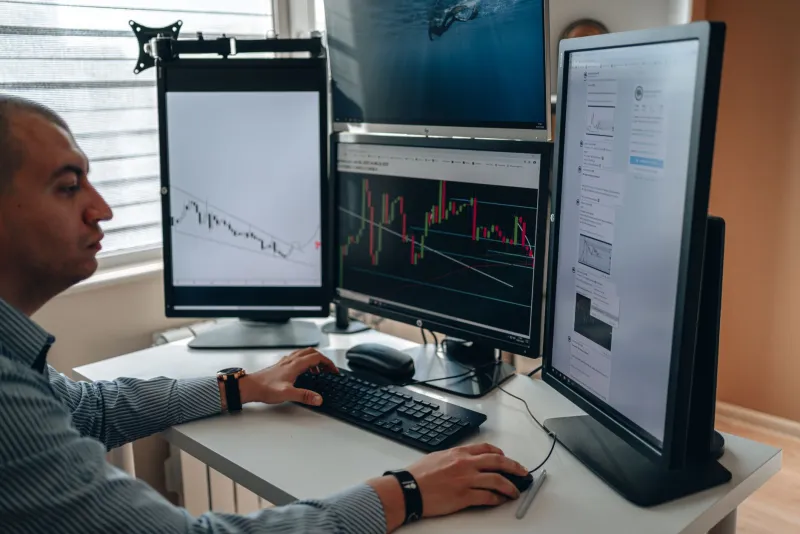
Most players walk into a live gaming session the same way they walk into a buffet — eyes bigger than their stomach, no real plan, and a vague hope that things just work out. Then they wonder why the night ends early.
Here's the thing: the players who consistently come out ahead aren't the luckiest ones in the room. They're the most disciplined. And a surprising number of them didn't learn that discipline at a gaming table. They borrowed it from the trading floor.
Professional traders and serious live gaming players have more in common than you'd think. Both are managing risk under pressure. Both are making fast decisions with real money on the line. And both will tell you the same thing: how you manage your capital matters more than any individual win or loss.
Let's get into the specifics.
Treat Your Bankroll Like a Business Account, Not a Fun Fund
The first mental shift serious players make is reframing what their bankroll actually is. When you think of your gaming budget as entertainment money — like what you'd spend on a concert or a night out — you naturally become loose with it. A few bad calls feel justified because hey, you were just having fun anyway.
But when you treat that same money like a business investment, everything changes. Suddenly, every decision has weight. You're not just playing — you're operating.
Take Marcus, a software engineer from Austin who plays live dealer games on platforms like Coba168 Live a few nights a week. He keeps a dedicated gaming account completely separate from his personal checking account. "I fund it once a month with a fixed amount," he says. "That's my operating capital. When it's gone, the session is over. Period."
That kind of structure removes the temptation to dip into other funds mid-session — one of the fastest ways players blow past their limits without even realizing it.
The 1-5% Rule: Position Sizing for Live Gaming
In trading, position sizing is everything. Most professional traders will never risk more than 1-5% of their total capital on a single trade. The logic is simple: even a string of losses won't wipe you out if each individual bet is a small percentage of the whole.
The same math applies directly to live gaming.
If your session bankroll is $500, risking $100 on a single hand or bet means five bad outcomes and you're done. But if you cap each play at $10-$25 (2-5% of your bankroll), you've got room to weather variance, adjust your strategy, and stay in the game long enough for things to turn.
This isn't about being timid. It's about survivability. You can't win from the sidelines, and you can't win if you've burned through your entire stack in the first twenty minutes.
Risk-to-Reward: Know What You're Actually Chasing
Traders never enter a position without knowing their target and their stop-loss. In plain terms: how much are they willing to lose, and how much do they stand to gain? If the potential upside doesn't justify the downside risk, they pass.
Live gaming players who think this way approach sessions with similar clarity. Before you sit down, ask yourself:
- What's my stop-loss? (The point where I walk away, no exceptions)
- What's my win target? (The point where I lock in profits and stop pressing)
- Does the bet I'm about to make have a reasonable return relative to its risk?
Jamila, a Chicago-based accountant and weekend live gaming enthusiast, sets hard stops for every session. "I decide before I start: if I lose 30% of my bankroll, I'm out. If I'm up 50%, I take half those winnings off the table and play with the rest." That trailing profit lock is a classic trader move — you're letting your gains run while protecting yourself from giving it all back.
The Emotional Spending Trap (And How to Dodge It)
This is where most players really lose the plot. Not to bad strategy, not to bad luck — to their own emotions.
Traders call it "revenge trading." Players call it "chasing losses." It's the same beast. You take a hit, your brain floods with cortisol and frustration, and suddenly you're doubling your bets trying to get back to even as fast as possible. That's not a strategy. That's a spiral.
Recognizing your emotional spending triggers is non-negotiable if you want to play smart over the long term. Common ones include:
The Tilt Bet — You just lost a hand that felt like a sure thing, and now you're betting bigger out of frustration rather than logic.
The FOMO Escalation — You're watching a hot streak at another table (or in a live chat) and you suddenly want a bigger piece of the action than your plan allows.
The "Just One More" Trap — You've hit your stop-loss but you tell yourself one more bet could turn it around. It almost never does.
Building in a mandatory cooldown period after a significant loss — even just five minutes away from the screen — can interrupt that emotional feedback loop before it costs you real money.
Session Logging: The Habit That Separates Amateurs from Pros
Pro traders keep detailed logs of every trade: entry point, exit point, rationale, outcome, emotional state. It sounds tedious, but it's how they identify patterns in their own behavior — both good and bad.
Serious live gaming players do the same thing. Even a basic notes app on your phone works. Log your starting bankroll, your session length, your biggest wins and losses, and — critically — how you were feeling when you made your largest bets.
Over time, you'll start to see patterns. Maybe you consistently overbet on Friday nights after a stressful week. Maybe you play sharper in shorter sessions. That data is gold, and you only get it if you track it.
Building a System That Outlasts a Lucky Streak
Here's the hard truth: anyone can win on a good night. Lucky streaks happen to everybody. The real question is whether your system is built to survive the inevitable bad nights without blowing up your entire bankroll.
The players who stick around — the ones who are still at the table a year from now, still playing smart, still growing their game — are the ones who built a structure around their play rather than relying on instinct alone.
Borrow from the traders. Set your position sizes. Know your stop-losses. Log your sessions. Keep your emotions in check.
At Coba168 Live, the action is always live and the energy is always real. But the players who truly thrive here bring more than excitement — they bring a plan. Bold play doesn't mean reckless play. It means knowing exactly what you're doing and why, every single time you step up to the game.
Play bold. But play smart. That's how you stay in the game long enough to win big.