Done Waiting for the Green Light: Why the 'Perfect Setup' Is Costing You More Than a Bad Beat Ever Could

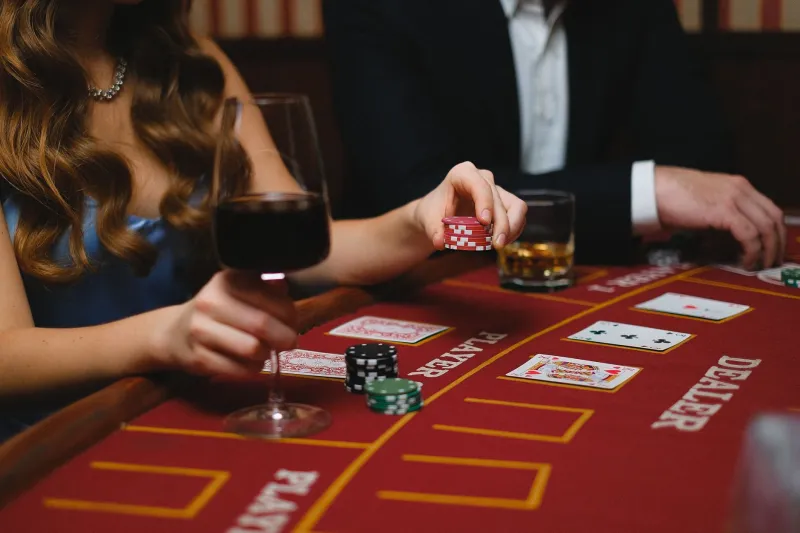
There's a player type you'll find at almost every live gaming table, in every online room, on every platform from Vegas to your favorite Southeast Asian-style live dealer stream. They watch. They analyze. They wait. They've got their checklist running in the background — the right odds, the right momentum, the right gut feeling. And they keep waiting.
Meanwhile, the action moves on without them.
Here's the uncomfortable truth that most gaming psychology content dances around: the myth of the perfect moment isn't a strategy — it's a trap. And it's costing players far more than a bad beat or a rough session ever would.
The Illusion of the Optimal Setup
Ask any serious live gaming player about their decision-making process and they'll probably describe something that sounds reasonable. They want confirmation. They want alignment between multiple signals. They want to feel sure. That sounds like discipline, right?
Not always. There's a meaningful difference between waiting because the data genuinely isn't there yet, and waiting because you're unconsciously avoiding the discomfort of being wrong. One is strategic patience. The other is fear with a spreadsheet.
Decision researchers call this "analysis paralysis" — a state where the accumulation of more information stops improving your decisions and starts preventing them. In live gaming environments specifically, this is a killer. Unlike a stock portfolio that can sit idle while you think, a live table doesn't pause. Odds shift. Momentum swings. The window that looked promising thirty seconds ago has already closed.
You weren't waiting for better conditions. You were waiting for certainty that doesn't exist.
The Real Math Behind 80% vs. 95% Confidence
Let's get concrete. Imagine a player — call him Marcus, a regular on live dealer platforms who's been grinding seriously for about two years. Marcus has a solid read on game flow. He knows when a session has favorable positioning. But Marcus also has a habit of sitting on his hands until everything lines up perfectly.
In a three-hour session, Marcus might identify eight solid opportunities. He acts on three of them — the ones where he felt truly locked in. The other five? He hesitated. The timing felt slightly off. One more confirmation would've been nice.
Now consider a different player in the same session with a similar skill level. She acts on six of those eight opportunities, accepting that two of them might not pan out. Statistically, even with a slightly lower win rate per decision, her volume of well-timed action generates more net value over the course of the session. More importantly, she's building pattern recognition through repetition — something Marcus isn't getting because he's barely playing.
This is the hidden cost nobody talks about. Inaction at 95% confidence doesn't just cost you the potential upside of the moment you missed. It costs you the compounding experience of making decisions under pressure. That's the real long-game tax.
How Fear Disguises Itself as Discipline
The sneaky thing about hesitation-as-fear is how legitimate it looks from the outside — and from the inside. Players who struggle with this often have genuinely good instincts. They've studied the game. They understand variance. They know that not every setup is worth chasing.
But somewhere along the line, the reasonable caution gets hijacked by something else. A bad stretch. A session that stung. A moment where acting "too early" cost them. And now their internal checklist has quietly added three more items without them noticing.
Sport psychologists who work with high-performance athletes describe a similar phenomenon in clutch situations. The players who freeze under pressure aren't usually under-prepared — they're over-thinking. Their brain has started treating action as the risk, when in reality, inaction carries its own set of consequences that are just less visible because they're abstract.
In live gaming, those abstract consequences show up in your session logs if you're tracking honestly. Missed entries. Setups you identified but didn't take. Hours spent watching rather than playing. Add those up over weeks and months and you're looking at a significant opportunity cost.
What Seasoned Players Do Differently
The players who've genuinely figured this out don't move recklessly. They haven't abandoned patience — they've just recalibrated what patience is for.
Here's what that looks like in practice:
They set decision thresholds in advance. Rather than asking "is this the perfect moment?" in real time (which is basically asking your anxiety to weigh in), they define beforehand what "good enough" looks like. If X and Y are present, they move. Full stop. No third condition required.
They treat hesitation as data. When they notice themselves stalling past their own threshold, they flag it. Not to beat themselves up, but to ask: is this new information, or is this the same fear I felt last Tuesday? If it's the latter, they act.
They separate outcome from process. A decision made at 80% confidence that doesn't pan out isn't proof the decision was wrong. Variance is real. Evaluating your decisions by their outcomes alone is how you end up paralyzed, always waiting for the universe to guarantee the result before you'll commit.
They review missed opportunities as seriously as losses. Most players track when they lost. Fewer track when they should have played but didn't. If you're not logging the setups you identified and passed on, you're missing half the picture.
The Live Gaming Edge That Nobody's Selling You
Platforms like Coba168 Live are built around fast-moving environments where conditions shift in real time. That's part of the appeal — the live action, the immediate feedback, the sense that something's always happening. But that same environment punishes the player who treats every decision like a dissertation defense.
The edge in live gaming isn't just about reading the game correctly. It's about acting on your read with enough consistency that your good judgment actually translates into results. A great read that you never act on is worth exactly nothing.
This doesn't mean spraying chips at every opportunity or abandoning the analytical side of your game. It means being honest with yourself about where your hesitation is coming from. Is it the data, or is it you?
Start Moving Before You're Ready
The next time you find yourself circling a decision, waiting for one more confirmation, here's a simple gut check: If the conditions were exactly this good three weeks ago, would you have acted? If the honest answer is probably not, then you're not waiting for better conditions. You're waiting to feel less afraid.
And that green light isn't coming.
The players who consistently win in live gaming environments aren't the ones who find the perfect moment. They're the ones who've made peace with the fact that good enough, executed with confidence, beats perfect every single time — because perfect never actually shows up.
Bold play isn't reckless play. It's the willingness to act on what you know, when you know it, without demanding a guarantee the game was never going to give you anyway.